
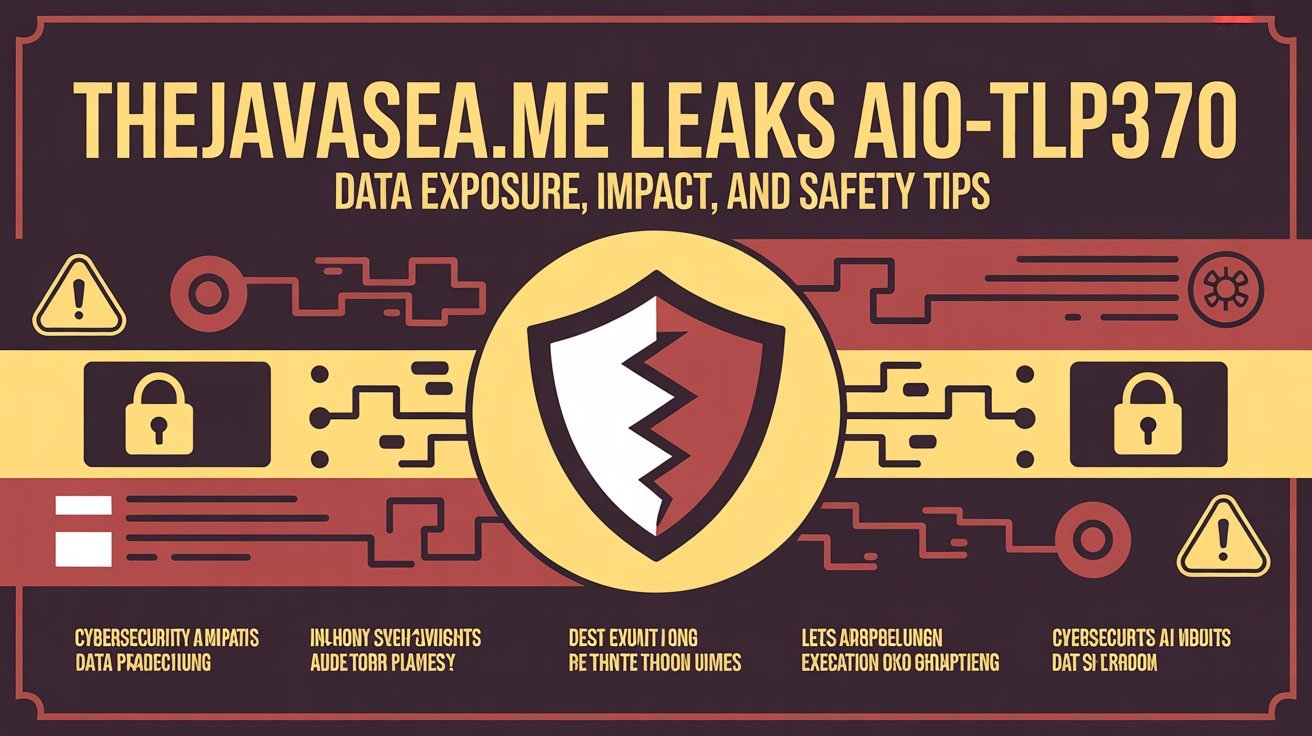
Introduction to thejavasea.me leaks aio-tlp370
The internet has transformed how information moves across the world. Data travels instantly, platforms store enormous amounts of information, and online communities continuously exchange digital resources. While these developments have created incredible opportunities, they have also introduced serious cybersecurity challenges. One topic that has recently drawn attention is “thejavasea.me leaks aio-tlp370.”
People searching for this phrase are often looking for explanations about what it means, why it has generated discussion online, and what cybersecurity implications may exist around leaked digital materials. Understanding these issues requires looking beyond internet rumors and focusing on broader concepts like information security, data protection, privacy risks, and responsible digital behavior.
The phrase combines references to a website name and what appears to be a specific leak identifier or package label. Situations involving alleged online leaks frequently raise concerns regarding unauthorized information distribution, cybersecurity vulnerabilities, and ethical responsibilities within online communities.
This article explores the topic from an educational and cybersecurity perspective. Rather than focusing on distributing or accessing potentially unauthorized content, the goal is to understand why leak-related discussions gain traction and what lessons organizations and individuals can learn from them.
What Does “TheJavaSea.me Leaks AIO-TLP370” Mean?
At first glance, the keyword appears technical thejavasea.me leaks aio-tlp370 and somewhat cryptic. Internet leak terminology often combines platform names with internal labels, archive identifiers, or collection tags.
“TheJavaSea.me” appears to reference a web platform associated with shared digital materials. Meanwhile, “AIO-TLP370” resembles an archive designation or thejavasea.me leaks aio-tlp370 organizational identifier. In many leak-related discussions online, naming conventions follow similar structures to categorize datasets, files, or collections.
The “AIO” component commonly stands for “All-In-One” in technology communities. This terminology may indicate a bundled package of materials grouped together for distribution. The “TLP370” section could function as an internal naming standard, version label, or identifier.
However, without verified public documentation, assumptions can become misleading. Online discussions frequently amplify speculation. A file label alone does not automatically explain content authenticity, origin, or legitimacy.
Cybersecurity professionals emphasize evidence-based analysis instead of relying solely on social media claims or forum discussions. Leak-related terminology often spreads rapidly before facts become clear.
Why Leak Discussions Gain Massive Attention Online
Digital leaks attract attention because information has value. Whether involving software tools, corporate data, entertainment media, or private documents, leaked material generates curiosity.
Several factors explain why discussions like “thejavasea.me leaks aio-tlp370” trend online.
Information Scarcity Creates Interest
When people believe information is hidden or difficult to obtain, curiosity naturally increases. Exclusive or allegedly restricted content often becomes a topic of conversation.
Internet culture amplifies this effect. Users share screenshots, rumors, summaries, and theories across platforms, causing interest to expand rapidly.
Cybersecurity Communities Monitor Potential Threats
Security researchers frequently track leak thejavasea.me leaks aio-tlp370 discussions because exposed information may reveal vulnerabilities.
If leaked materials involve compromised credentials, databases, software assets, or internal systems, cybersecurity teams need awareness to assess risks.
Threat intelligence communities routinely monitor suspicious activity patterns to identify emerging threats before damage escalates.
Viral Sharing Accelerates Visibility
Social media dramatically changes how quickly information spreads.
A niche discussion can become widely visible within hours. Forums, messaging groups, content-sharing sites, and discussion boards accelerate visibility even thejavasea.me leaks aio-tlp370 when details remain unverified.
As a result, leak-related keywords frequently appear in search trends.
Public Concern About Privacy Continues Growing
People increasingly recognize how thejavasea.me leaks aio-tlp370 vulnerable digital information can become.
Major cybersecurity incidents over recent years have increased awareness regarding:
- Data breaches
- Credential theft
- Privacy violations
- Corporate cybersecurity failures
- Information misuse
Consequently, users often investigate unfamiliar leak terminology to understand possible implications.
The Growing Problem of Data Leaks in Modern Cybersecurity
The conversation surrounding “thejavasea.me leaks aio-tlp370” reflects a larger cybersecurity reality: data leaks have become a major global challenge.
Organizations store enormous volumes of information digitally.
Examples include:
- Customer records
- Payment information
- Authentication credentials
- Internal documents
- Software repositories
- Employee communications
- Cloud infrastructure assets
Weak security controls create opportunities for attackers.
Several common causes contribute to leaks.
Weak Password Practices
Passwords remain one of cybersecurity’s biggest weaknesses.
Many users continue using:
- Reused passwords
- Predictable passwords
- Short passwords
- Shared login credentials
Compromised authentication systems often thejavasea.me leaks aio-tlp370v create entry points for attackers.
Strong password hygiene reduces exposure significantly.
Misconfigured Cloud Storage
Cloud environments provide flexibility but require proper security configuration.
Misconfigured storage systems may accidentally expose sensitive assets publicly.
Examples include:
- Open databases
- Public storage buckets
- Improper access permissions
- Unsecured backup systems
Organizations increasingly rely on automated security monitoring to detect configuration problems.
Phishing Attacks
Phishing remains highly effective because attackers thejavasea.me leaks aio-tlp370 target human behavior rather than technology alone.
Cybercriminals may impersonate:
- Employers
- Service providers
- Financial institutions
- Software vendors
Users who unknowingly provide credentials can unintentionally enable unauthorized access.
Security awareness training plays an essential role in prevention.
Insider Threats
Not every leak originates from external attackers.
Internal risks may include:
- Negligent employees
- Former staff members
- Malicious insiders
- Poor access management policies
Organizations increasingly implement zero-trust thejavasea.me leaks aio-tlp370 frameworks to minimize insider risk exposure.
Why Unauthorized Leaks Create Serious Risks
Some internet users mistakenly assume leaks only affect corporations. In reality, leak incidents often impact individuals as well.
Unauthorized data exposure creates multiple problems.
Identity Theft Risks
Personal information may enable identity fraud.
Exposed details can include:
- Names
- Addresses
- Contact information
- Login credentials
- Financial records
Criminal actors may combine leaked data from multiple sources to strengthen fraudulent activities.
Financial Consequences
Data compromise frequently creates direct financial harm.
Organizations affected by breaches often face:
- Investigation expenses
- Regulatory penalties
- Legal costs
- Recovery infrastructure expenses
- Customer trust losses
Individuals may also experience financial theft.
Reputation Damage
Trust takes years to build but can disappear quickly.
Companies experiencing major information exposure incidents may struggle to rebuild public confidence.
Customers increasingly prioritize cybersecurity thejavasea.me leaks aio-tlp370 maturity when selecting products and services.
Operational Disruption
Security incidents often disrupt operations.
Organizations may temporarily suspend services while:
- Investigating exposure
- Resetting credentials
- Deploying patches
- Performing forensic analysis
Recovery efforts consume significant resources.
Responsible Behavior Around Leak Discussions
When encountering discussions involving alleged leaks, responsible online behavior matters.
Curiosity is understandable. However, cybersecurity professionals recommend ethical approaches.
Verify Information Carefully
Internet claims spread rapidly.
Before accepting statements as fact:
- Check reliable reporting
- Compare multiple sources
- Look for official confirmations
- Avoid rumor amplification
Misinformation frequently accompanies cybersecurity incidents.
Avoid Downloading Unverified Files
Unknown files create substantial security risks.
Potential dangers include:
- Malware infections
- Credential theft tools
- Spyware deployment
- Ransomware delivery
Attackers often exploit trending topics to distribute malicious software.
Users should avoid downloading files from thejavasea.me leaks aio-tlp370 suspicious or unverified sources.
Prioritize Digital Security Hygiene
Basic cybersecurity practices remain highly effective.
Strong habits include:
- Multi-factor authentication
- Password managers
- Security updates
- Antivirus protection
- Device encryption
- Account monitoring
Proactive security measures reduce exposure significantly.
Respect Privacy and Legal Boundaries
Unauthorized information distribution raises ethical and legal concerns.
Privacy protection remains a critical component of responsible internet use.
Cybersecurity awareness includes recognizing thejavasea.me leaks aio-tlp370 boundaries around accessing, sharing, or distributing potentially unauthorized materials.
How Organizations Can Reduce Leak Risks
Modern businesses cannot eliminate cybersecurity risk entirely, but they can reduce exposure.
Several strategies improve resilience.
Implement Zero Trust Security Models
Traditional security approaches often assumed trusted internal environments.
Zero-trust architecture changes that assumption.
Core principles include:
- Continuous verification
- Least privilege access
- Device validation
- Segmented environments
Organizations increasingly adopt zero-trust thejavasea.me leaks aio-tlp370 frameworks to strengthen defenses.
Strengthen Access Controls
Not every employee requires universal system access.
Role-based permissions reduce exposure.
Access management strategies include:
- Permission audits
- Privileged account monitoring
- Authentication controls
- Access expiration policies
Minimizing unnecessary access reduces attack surfaces.
Conduct Security Audits Regularly
Security assessments identify weaknesses before attackers exploit them.
Common assessment approaches include:
- Penetration testing
- Vulnerability scanning
- Configuration reviews
- Infrastructure audits
Continuous improvement strengthens thejavasea.me leaks aio-tlp370 resilience.
Train Employees Consistently
Technology alone cannot solve cybersecurity challenges.
Human awareness remains essential.
Training programs help employees recognize:
- Phishing attempts
- Social engineering attacks
- Suspicious downloads
- Credential security issues
Prepared employees become stronger security defenses.
Cybersecurity Awareness for Everyday Internet Users
The broader lesson behind discussions like “thejavasea.me leaks aio-tlp370” extends beyond organizations.
Individual users also benefit from stronger security awareness.
Use Unique Passwords
Password reuse creates cascading risk.
If one service becomes compromised, reused credentials may expose additional accounts.
Password managers simplify secure credential management.
Enable Multi-Factor Authentication
Multi-factor authentication adds protective layers.
Even compromised passwords become less valuable when secondary verification exists.
Common MFA methods include:
- Authentication apps
- Hardware keys
- SMS verification
- Biometric verification
Security experts consistently recommend MFA adoption.
Update Devices Regularly
Software updates frequently contain security fixes.
Delaying updates increases exposure windows.
Users should maintain updates across:
- Operating systems
- Browsers
- Mobile devices
- Applications
Patch management remains a foundational security practice.
Watch for Suspicious Links
Social engineering attacks continue evolving.
Users should remain cautious regarding:
- Unexpected messages
- Urgent account warnings
- Unverified downloads
- Unknown attachments
Awareness reduces risk substantially.
The Role of Cybersecurity Culture in the Digital Era
Technology changes rapidly.
Security challenges evolve alongside innovation.
Organizations increasingly recognize cybersecurity as a cultural responsibility rather than purely an IT issue.
Strong cybersecurity culture includes:
- Leadership commitment
- Employee education
- Transparent reporting processes
- Continuous improvement initiatives
Companies investing in long-term security maturity often respond more effectively when incidents occur.
Digital resilience depends not only on technical defenses but also on organizational behavior.
The same principle applies to individuals.
Responsible internet habits create stronger collective cybersecurity outcomes.
Looking Beyond Internet Rumors
Keywords like “thejavasea.me leaks aio-tlp370” often emerge within environments shaped by speculation, partial information, and online discussion momentum.
Responsible analysis requires distinguishing evidence from assumptions.
Cybersecurity conversations become more productive when focused on:
- Risk awareness
- Security education
- Prevention strategies
- Ethical digital practices
Internet users benefit from critical thinking.
Not every online claim reflects reality.
Verification remains essential.
Approaching cybersecurity discussions thoughtfully improves understanding while reducing misinformation.
Conclusion
“Thejavasea.me leaks aio-tlp370” represents more than a trending search phrase. It reflects broader concerns surrounding digital security, information exposure, privacy risks, and responsible online behavior.
Modern cybersecurity challenges continue growing as technology expands. Organizations face pressure to strengthen defenses. Individuals increasingly need stronger digital habits.
Leak-related discussions highlight important lessons:
- Security matters at every level
- Verification prevents misinformation
- Privacy deserves protection
- Responsible behavior strengthens digital ecosystems
Whether examining alleged leaks, cybersecurity incidents, or emerging online trends, awareness remains one of the strongest defenses.
The digital world offers enormous opportunities, but maintaining security requires ongoing attention, education, and responsible participation from everyone involved.








Leave a Reply